
Fillers for Wear-Resistant Matte Coatings
I. Hard Abrasive-Type Fillers (Provide both wear resistance and a matte finish; suitable for UV-curable coatings, powder coatings, and wear-resistant anti-corrosion paints)
1. White Fused Alumina (WA) Micropowder

With a Mohs hardness of 9, White Fused Alumina (WA) is white, highly bright, and low in iron content. Its angular particles serve a dual purpose: they create a wear-resistant structural framework while simultaneously scattering light from their surfaces to produce a matte or frosted effect.
Suitable for: Transparent UV-curable coatings, light-colored/white ceramic-modified fluorocarbon powder coatings, and non-stick coatings for cookware.
Drawbacks: The particles have sharp edges; if the fine powder is not dispersed properly, it may cause micro-scratches. Not suitable for pure black systems.
2. Green Silicon Carbide (GC) Micropowder

Green Silicon Carbide (GC) has a Mohs hardness of 9.4, offering superior wear resistance and good thermal conductivity.
Suitable for: Black or dark-colored wear-resistant anti-corrosion coatings, anti-static wear-resistant paints, and thermal control coatings for aerospace applications.
Drawbacks: Cannot be used in light-colored or transparent clear coats, as it will cause discoloration.
3. Black Silicon Carbide (SiC) Micropowder

Black Silicon Carbide (SiC) has a Mohs hardness of 9.15. It is black in color and offers a higher cost-performance ratio.
Suitable for: Wear-resistant floor coatings, thermal insulation and fire-retardant composite coatings for lithium-ion batteries, and general dark-colored wear-resistant anti-corrosion paints.
Drawbacks: Not for use in light-colored systems. Due to its high free-carbon content, it should be used with caution in applications requiring high electrical insulation.
4. Brown Fused Alumina (BFA) Micropowder
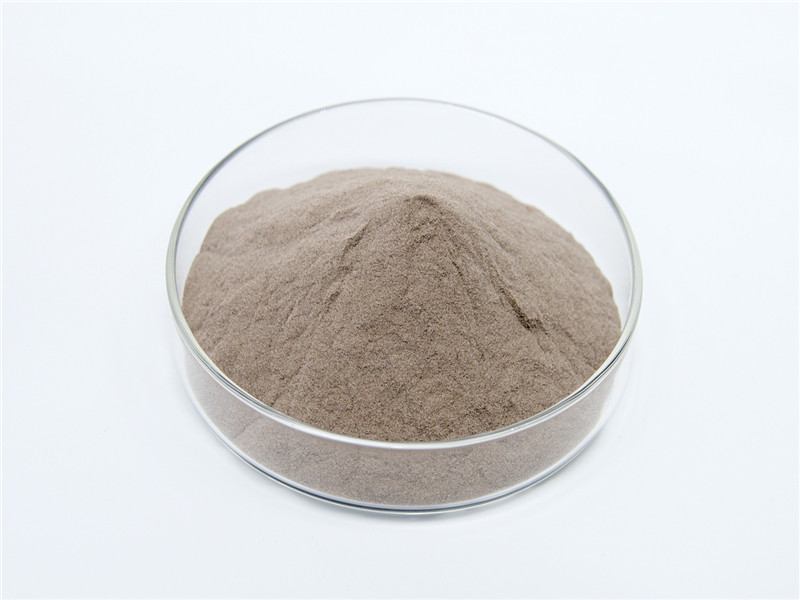
Brown Fused Alumina (BFA) has a Mohs hardness of 9. It is brownish in color, contains iron, and is the most economical option.
Suitable for: Heavy-duty epoxy flooring and dark-colored primers for construction machinery.
Drawbacks: Not suitable for light-colored coatings, coatings applied to aluminum or titanium substrates, or products requiring high weather resistance, as it is prone to causing rust spots or yellowing.
II. Other Inorganic Wear-Resistant Matte Fillers
1. Fused Silica Powder / Crystalline Silica Powder (SiO₂)
With a Mohs hardness of 7 and a refractive index close to that of resins, it ensures good transparency in clear coats. It provides a soft matte finish, moderate wear resistance, and excellent electrical insulation. It is used in electronic insulating coatings, UV-curable wood coatings, and transparent matte topcoats. However, its wear resistance is lower than that of white fused alumina or silicon carbide, making it unsuitable for heavy-duty, high-erosion environments.
2. Calcined Alumina (Non-fused; distinct from white fused alumina)
Typically spherical or near-spherical in shape, it is finer than white fused alumina, posing a lower risk of scratching. It offers a soft matte finish and is frequently used in high-end optical coatings.
3. Platelet white aluminum oxide


Characterized by a plate-like or flaky structure, this material provides wear resistance, UV protection, and resistance to moisture vapor permeability. It yields a smooth, fine matte finish and is commonly used in automotive paints and baked metal coatings.
4. Barium Sulfate, Kaolin, and Diatomaceous Earth
These are lower-cost matte fillers with significantly weaker wear resistance. Their primary function is to provide a matte effect; any wear resistance they offer is merely incidental rather than a core functional property.
5. Fumed Silica (Pyrogenic Silica)
A nanoscale material primarily used for matting, anti-settling, and thixotropic control. It offers only limited improvement to wear resistance and is typically used in combination with hard abrasive fillers rather than serving as a wear-resistant filler on its own.