
Applications of Brown Corundum in the Ceramics Industry
First, what is brown corundum? What are its properties?
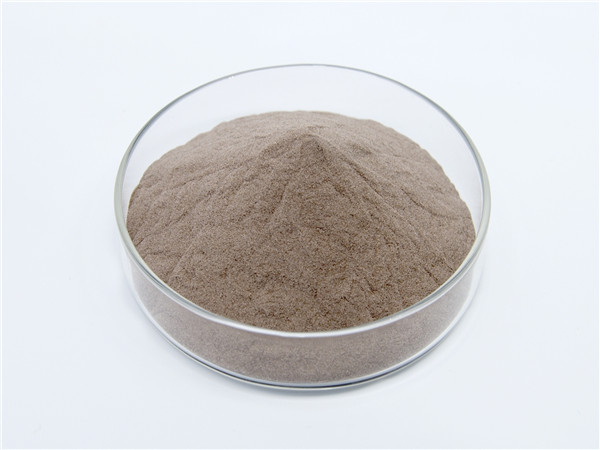
Brown corundum is made from high-quality bauxite, anthracite, and iron ore. It is smelted in an electric arc at temperatures exceeding 2000°C, crushed in an autogenous mill, magnetically separated to remove iron, and sieved to various particle sizes. The fine powder is then acid-washed, water-washed, and overflow-graded. It boasts high cleanliness, a concentrated particle size, a dense texture, high hardness, and excellent toughness.
Brown corundum has a wide range of applications in the ceramics industry, primarily in the following areas:
Ceramic Glazes
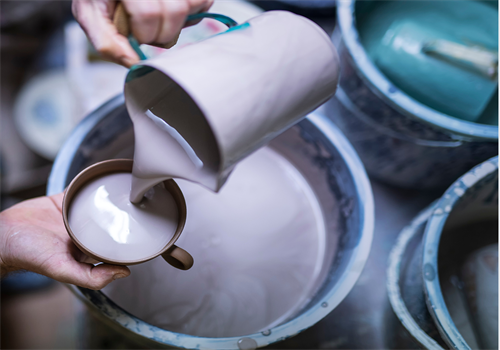
Brown corundum can be added as a pigment and abrasive to ceramic glazes. Its color stability, high-temperature resistance, and wear resistance enhance the decorative and protective properties of the glaze. The addition of brown corundum significantly improves the glaze’s hardness and scratch resistance.
Ceramic Green Body
Brown corundum acts as a reinforcing agent in ceramic green bodies, improving their mechanical properties, wear resistance, density, and sintering performance. It also improves the impact resistance and thermal stability of the blank.
Ceramic Abrasives
Brown corundum is an ideal abrasive for ceramic abrasives due to its high hardness, wear resistance, and uniform particle size. By combining it with other materials, abrasives with varying properties can be produced to meet diverse needs.
Ceramic Coatings
Brown corundum in ceramic coatings significantly improves wear resistance, chemical stability, and high-temperature resistance, making it suitable for applications in automotive parts, mechanical equipment, and other fields. It also strengthens the bond between the coating and the substrate.
Precision Ceramic Processing
During the polishing process, brown corundum abrasives can improve the finish and appearance of ceramic products while enhancing their mechanical properties and durability.
Refractory Materials
Brown corundum is also used to manufacture high-grade refractory bricks and monolithic refractory materials, suitable for lining high-temperature equipment in the ceramic industry.
In the future, with advances in modification technology, the application of brown corundum in the ceramic industry will become even more extensive.