
Advantages of brown aluminum oxide in sandblasting
Brown aluminum oxide,is also called brown fused alumina,brown corundum ,brown electrocorundum or brown fused aluminum oxide, and short for BFA or A.
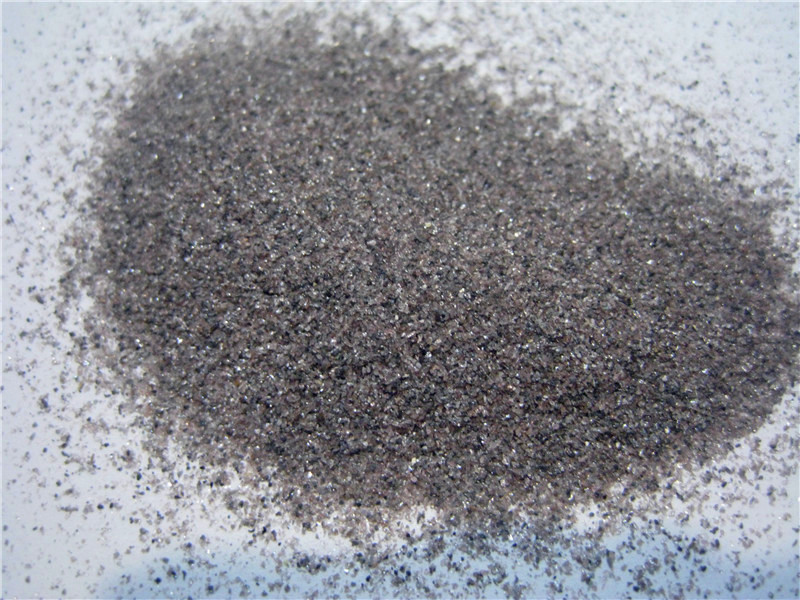
The core advantages of brown aluminum oxide in sandblasting are high hardness (Mohs level 9), good self-sharpening, high toughness, low dust, recyclability, and suitable for efficient cleaning, rust removal and surface strengthening of various metal and non-metal materials.
High hardness and wear resistance: With a Mohs hardness of 9, second only to diamond and silicon carbide, it can quickly remove oxide layers, rust, old coatings and burrs, and is suitable for processing high-strength materials such as stainless steel, cast iron and aluminum alloys.
Self-sharpening and continuous cutting force: When impacted, the particles are micro-fractured to form a new sharp cutting edge, avoiding passivation and ensuring stable sandblasting efficiency, especially suitable for automated production lines.
Low dust and environmental friendliness: High specific gravity and high bulk density result in less dust during spraying; free of free silica or toxic heavy metals, meeting occupational health and environmental protection standards.
High toughness and low loss: The crystal structure is dense, impact resistant and not easy to powder. The loss in a single use is lower than that of abrasives such as garnet sand (about 1/3 of the usage can be saved). It can usually be recycled 5-10 times.
Excellent surface quality: It forms a uniform micro-roughness, improves the adhesion of coatings/platings, leaves no embedded residue, and has good demolding properties (outstanding in the casting field); the roughness can be precisely controlled by the particle size (e.g., F16–F320).
Strong chemical and thermal stability: acid and alkali resistant, does not react with workpieces, has stable performance at high temperatures (≤1900°C), and is suitable for complex industrial environments.
Wide applicability: Suitable for steel structures, ships, molds, glass, ceramics, stone, and even composite materials, covering various scenarios such as rust removal, sandblasting strengthening, sandblasting etching, and surface matte finishing.